
As the Building Safety Regulator warns of “great danger” from unregistered subcontractors, the construction industry faces renewed scrutiny of its quality controls. This insight explores how the historic role of the Clerk of Works is more vital than ever in delivering safety, compliance, and value, and how Circle Development is redefining this essential profession for the modern age.
A moment of reckoning for building safety
When Andy Roe, chair of the Building Safety Regulator (BSR), gave evidence to the House of Lords at the end of October, his warning was blunt: the unregulated system of subcontractors “still holds great danger.” His comments came amid reports of 33,000 new homes caught in the BSR’s gateway two backlog, with average processing times stretching to 43 weeks nationally, far beyond the 12-week target.
The gateway system, introduced under the Building Safety Act, aims to ensure higher-risk buildings (HRBs) meet strict safety and design standards before work begins. But delays and uncertainty highlight deeper issues: inconsistent quality assurance, fragmented accountability, and a skills gap across the construction process.
Against this backdrop, Roe’s call to “understand all professionals’ roles” and his reference to the Clerk of Works felt like a reminder of what the industry has lost, and what it must regain.
The evolution of the Clerk of Works, from medieval craftsmanship to modern oversight
The Clerk of Works is one of construction’s oldest professions, with origins dating back to the 13th century. The title itself derives from “Clerics of the Works”, literate men in Holy Orders who were entrusted to plan and supervise the construction of churches and ensure that valuable building materials were not stolen. By the 19th century, the role evolved to encompass all forms of construction, performed by skilled tradesmen with extensive practical knowledge. Yet while the tools have changed, the principle has not: the Clerk of Works remains an independent guardian of quality and value, working on behalf of the client to ensure projects are delivered as designed, specified, and compliant.
Today, some modern titles, such as Site Inspector, attempt to capture the same function. However, the independence, integrity, and vigilance embodied in the original title remain just as relevant, especially in the era following Grenfell and Lakanal House. As the Institute of Clerks of Works and Construction Inspectorate (ICWCI) reminds us, the profession’s motto, “Ability, Integrity, Vigilance,” captures exactly what modern construction needs.
The Clerk of Works remains the cornerstone of quality assurance, an independent guardian ensuring that what’s designed is what’s delivered. At Circle we go a step further through digital reporting, real-time collaboration, and data-led insight, bringing traditional rigour into a modern, connected workflow.
Lewis Walker
Associate Director Quality
Reimagining the Clerk of Works for today’s construction challenges
At Circle Development, we’ve made it our mission to redefine what the Clerk of Works means in modern practice. Through a balance of deep technical knowledge, trusted contractor relationships, and cutting-edge technology, our Clerks of Works deliver proactive quality assurance that adds measurable value to every project.
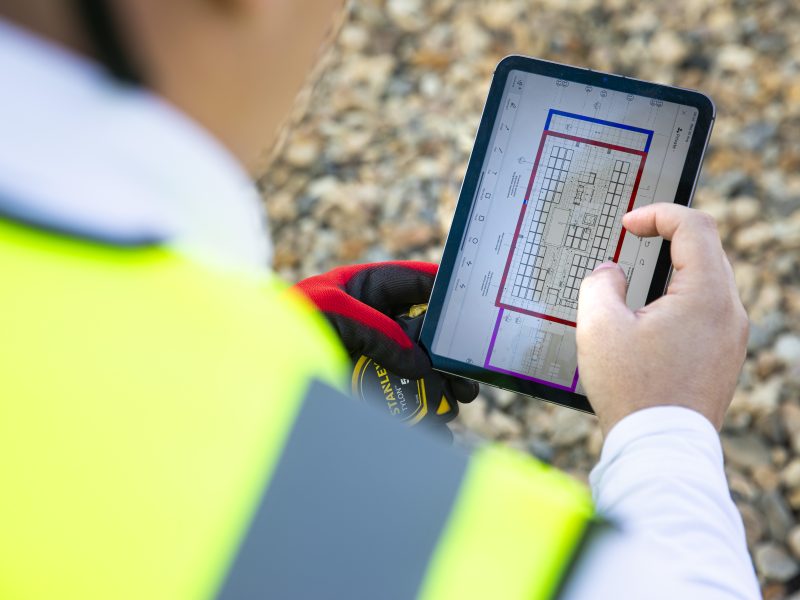
Our teams provide regular site attendance, weekly client reporting, and monthly progress summaries that detail key risks, compliance checks, and observations. Using our bespoke digital inspection app, clients receive real-time updates, complete with photos, dashboards, and traffic-light tracking.
Importantly, we approach observations not as criticisms, but as constructive insights, queries and advice shared collaboratively with contractor and client teams. This promotes a culture of shared accountability, not confrontation.
Joined-up assurance for Quality Management beyond snagging
Our Quality Management (Snagging) service extends this philosophy, ensuring compliance and quality throughout construction and handover. With experienced professionals drawn from across the built environment, our team reviews every element of the employer’s requirements, design deviations, and contract documentation to ensure that the final build matches the original intent, in both quality and performance.
Using our cloud-based platform, clients can access live snagging reports, audit trails, and photographic records, enabling transparency and trust at every stage. Whether using our software or integrating with contractor-preferred systems, we ensure that construction quality assurance is consistent, accountable, and verifiable.

Evidence of the value of independent oversight
Our approach to independent inspection and quality assurance has supported the successful delivery of many projects across the UK, from large-scale regeneration schemes to super-prime developments. The examples below represent just a selection from our portfolio, demonstrating the scale, diversity, and geographical reach of our work, spanning London and beyond to Leith, Scotland.
Together, these projects showcase Circle’s ability to operate across multiple sectors, including Build to Rent (BtR), super-prime residential, co-living, single-family housing (SFH), commercial, industrial, hotels, education, and heritage developments, each with its own distinct challenges and quality benchmarks.
-
Brent Cross Town – Acting as Clerk of Works and Quality Managers across multiple plots, we support Related Argent in delivering over 800 homes as part of a pioneering net-zero neighbourhood.
-
The BeCa, Old Kent Road – Acting as Clerk of Works, we oversee the build quality and compliance of 170 NYC-inspired apartments, ensuring design integrity is maintained from shell to fit-out.
-
Water Street, Leith – In a multi-role capacity as Clerk of Works, Quantity Surveyor, and Employer’s Agent, we’re ensuring heritage meets modern performance standards as a 1950s whisky bond transforms into a sustainable aparthotel.
-
Block C, Rivermark – Acting as CoW on behalf of Heim, protecting the quality of their investment currently on site being delivered by Taylor Wimpey.
These examples demonstrate the breadth of our expertise, from high-density urban regeneration to adaptive reuse, industrial revitalisation, and design-led living spaces, and reaffirm our belief that the Clerk of Works role is not a cost, but an investment in quality, compliance, and client confidence.
Industry trends and emerging challenges
As the industry evolves, so too do the challenges facing the Clerk of Works. Prefabricated modules, pods, and modern methods of construction (MMC) introduce new complexities in quality control. While these innovations promise efficiency, they also demand new inspection techniques and a deeper understanding of offsite manufacturing.
Post-Grenfell, awareness of fire stopping and passive fire protection has improved significantly, but maintaining those standards requires constant vigilance. The BSR’s gateway process is reshaping accountability, but it will succeed only if supported by a workforce that understands both regulation and real-world construction. The Clerk of Works, independent, technically skilled, and present on site — is a crucial link in that chain.
The construction industry is under more scrutiny than ever before. Yet the path forward is clear: safety and quality depend not only on strong regulation but on skilled, independent professionals who ensure those regulations are upheld on site.
At Circle Development, we are proud to carry forward the legacy of the Clerk of Works, combining centuries-old principles of integrity and vigilance with modern digital tools and collaborative practice to deliver safer, better, and more sustainable buildings.
Discover more about our cLERK OF WORKS service
Discover how Circle Development’s Clerk of Works and Quality Management services can safeguard your projects through expert oversight and modern digital assurance.